
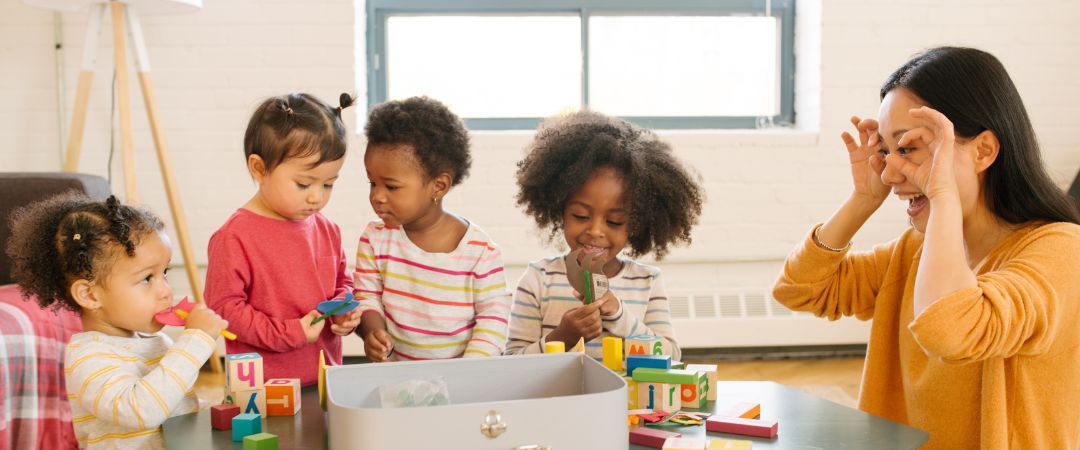
Somewhere around the second birthday, a lot of toddlers start saying “me do it.” They want to put on their own shoes. They want to hold the spoon. They also want to carry a full cup across the room, which does not always end well.
If you have a toddler at home, you know how much patience this takes. Daycare can really help during this stage. Below, we go over how daycare supports toddler independence, which skills children practice, and what you can do at home so both places work together.
Why Independence Matters in the Toddler Years
Toddlers are figuring out that they are their own little people with their own ideas. That is why “no” becomes a favorite word. When they get to do things for themselves, like washing their hands or picking a book, they feel capable. That feeling turns into confidence over time, and a confident child is more willing to try new things.
It also helps later on. Children who can handle small tasks usually move into preschool with less stress. They can follow simple steps, ask an adult for help, and cope when the day changes. Teachers call this preschool readiness, and for most kids it starts with everyday jobs like the ones below. It also builds toward kindergarten readiness a few years down the road.
How Daily Routines Help
Toddlers feel calmer when they know what comes next. At a good daycare for toddlers, the daily schedule follows a steady order. Arrival, play, meals, naps, story time, and outside time. After a few weeks, children expect each part and start joining in without being told.
Routine also gives them a reason to practice. They hang their bag in the same spot every morning. They wash their hands before every meal. Teachers wait while the child tries, even when it takes a while. The day in our Edison toddler program runs on this kind of rhythm, and parents can follow along through daily app updates on meals, naps, and learning moments.
Self-Help Skills Toddlers Practice at Daycare
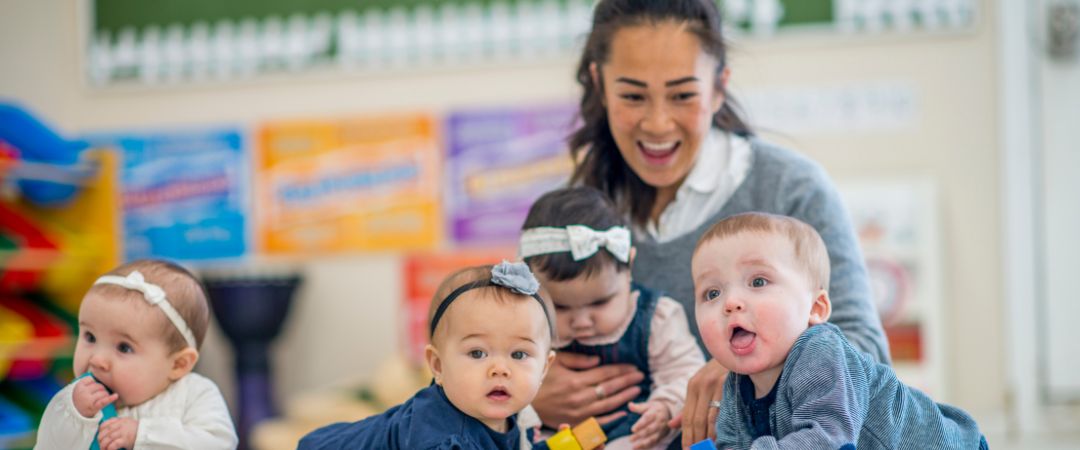
Self-help skills are the small jobs that make a child more capable. A structured curriculum gives toddlers many chances to try them, again and again. Other kids are doing the same things nearby, and toddlers love to copy each other.
Here are some skills toddlers often work on:
- Washing and drying hands
- Putting on and taking off jackets and shoes
- Eating with a spoon or fork
- Drinking from an open cup
- Putting toys back in bins
- Carrying a cup or plate to the table
- Starting potty training, with lots of help at first
- Telling a teacher what they need, with words or signs
What Toddlers Learn During a Normal Day
Not every part of the day looks like a lesson. But almost every part teaches something. This table shows a few examples.
| Part of the Day | What the Toddler Does | Skill They Build |
|---|---|---|
| Arrival | Puts away bag and coat | Memory, responsibility |
| Meals and snacks | Uses a spoon, drinks from a cup | Self-feeding, hand control |
| Free play | Picks a toy or activity | Decision making |
| Clean-up | Puts toys back on shelves | Order, teamwork |
| Bathroom breaks | Follows the same steps each time | Body awareness, potty training readiness |
| Nap time | Settles on a mat or cot | Self-soothing, calm habits |
| Outdoor play | Runs, climbs, balances | Large muscle skills, safety sense |
Simple Choices Give Toddlers Some Control

Toddlers hear “no” all day long. They also have very little say in how their day goes. That is a big reason they push back. Teachers often handle this by offering small choices. “Do you want the red cup or the blue cup?” Both are fine with the adult. The child gets to decide, and the adult still keeps things safe.
These small choices teach bigger lessons. A child learns that their voice counts. They also learn that choices have results. If they pick the blue cup, they get the blue cup. If they leave a toy on the floor, it might get stepped on. The lessons are gentle, so they tend to stick. Over time, this can make dressing and mealtimes a bit less of a fight.
Social Skills Grow With Independence
Independence and social skills go together. In a group, toddlers have to wait for a turn, share space, and ask for what they want. That is a lot for a two-year-old. It gets easier with practice, and a classroom gives plenty of it every day.
Teachers help by giving children the words. “Tell Mia you are using it.” “Ask for a turn, please.” At first the teacher says it. Later the child says it. Through classroom activities and learning through play, toddlers also learn to notice how others feel and to solve small problems on their own. Separation anxiety does not vanish overnight. But it often gets easier as the child feels safe and starts to see that they can handle the day.
What Parents Can Do at Home
Daycare is only part of the picture. When home and daycare back the same skills, toddlers learn faster. Here are a few easy things to try:
- Let your child dress themselves, even if it takes longer
- Keep a low hook or shelf for their coat and shoes
- Offer two choices instead of open questions
- Give them a small job, like putting napkins on the table
- Use a step stool so they can reach the sink
- Say what they did well, like “you worked hard on that zipper”
- Stay calm when things get messy
Try not to jump in too soon. It is hard to watch a child fight with a zipper. But if you do it every time, they miss the practice. It also helps to ask the teacher what skills your child is working on this month. Then you can practice the same ones at home. The info for parents a daycare shares can also tell you how they handle routines and daily care.
Common Mistakes That Slow Things Down
Most loving parents do a few of these. It is okay. Noticing them is the first step.
- Doing everything to save time, which takes away practice
- Fixing your child’s work while they watch
- Expecting too much, like tying shoes at age two
- Comparing your child to a cousin or a friend’s child
- Saying “good job” for everything, so the words lose meaning
Conclusion
Toddler years go fast, and they are a bit funny. One month your child cannot hold a spoon. A few months later they are carrying their own plate to the sink like a tiny waiter. Most of that growth happens in ordinary moments, like a coat, a cup, or a pile of blocks.
So the best thing we can do is slow down a little. Give them time, stay close, and let them figure out the zipper. A daycare can do this every day, and you can do it at home too. Some days will be messy. That is usually when the learning happens.
Want to see how this works in a real classroom?
schedule a tour at Little Einstein’s Academy in Edison or Roselle, NJ. Meet our teachers, see the toddler rooms, and ask us anything about daily routines, meals, and how we help children feel confident.
Frequently Asked Questions
At what age can toddlers start learning independence?
Many children show early signs between 12 and 18 months. They may try to hold a spoon or pull off their socks. By age two, they often want to do lots of things alone. This is a good time to offer simple tasks and plenty of practice.
Does daycare help toddlers become more independent than staying home?
It can help. Daycare gives toddlers a steady routine, other children to copy, and teachers who know when to step back. Homes can build independence too, especially when parents give time and choices. The best results usually come when both work together, and that is a big part of why early childhood education matters so much in these years.
How do I know if my toddler is ready for potty training?
Common signs include staying dry for a couple of hours, showing interest in the toilet, and telling you when a diaper is wet. Every child is different, so there is no perfect age. Talk with your child’s teacher. Using the same steps at home and at daycare can make it easier.
What if my toddler cries at drop-off every morning?
This is very common, especially in the first few weeks. Keep your goodbye short and warm, and use the same routine each day. Many children settle soon after the parent leaves. If the crying goes on for weeks, talk to the teacher about what might help.
How can I tell if a daycare supports independence?
Visit during the day if you can. Look for toys children can reach by themselves and sinks or shelves at their size. Watch how teachers act when a child struggles. Do they let the child try first? Do they offer choices? Ask what skills they work on each month. This is one of many daycare tour questions that parents often forget. A good teacher can tell you right away.
Many children show early signs between 12 and 18 months. They may try to hold a spoon or pull off their socks. By age two, they often want to do lots of things alone. This is a good time to offer simple tasks and plenty of practice.