Is your child ready for kindergarten? Every parent wonders. The good news: kindergarten readiness is not about knowing everything — it is about having the foundational skills to learn. This checklist covers exactly what NJ teachers look for, and what you can do at home and at daycare to help your child get there.
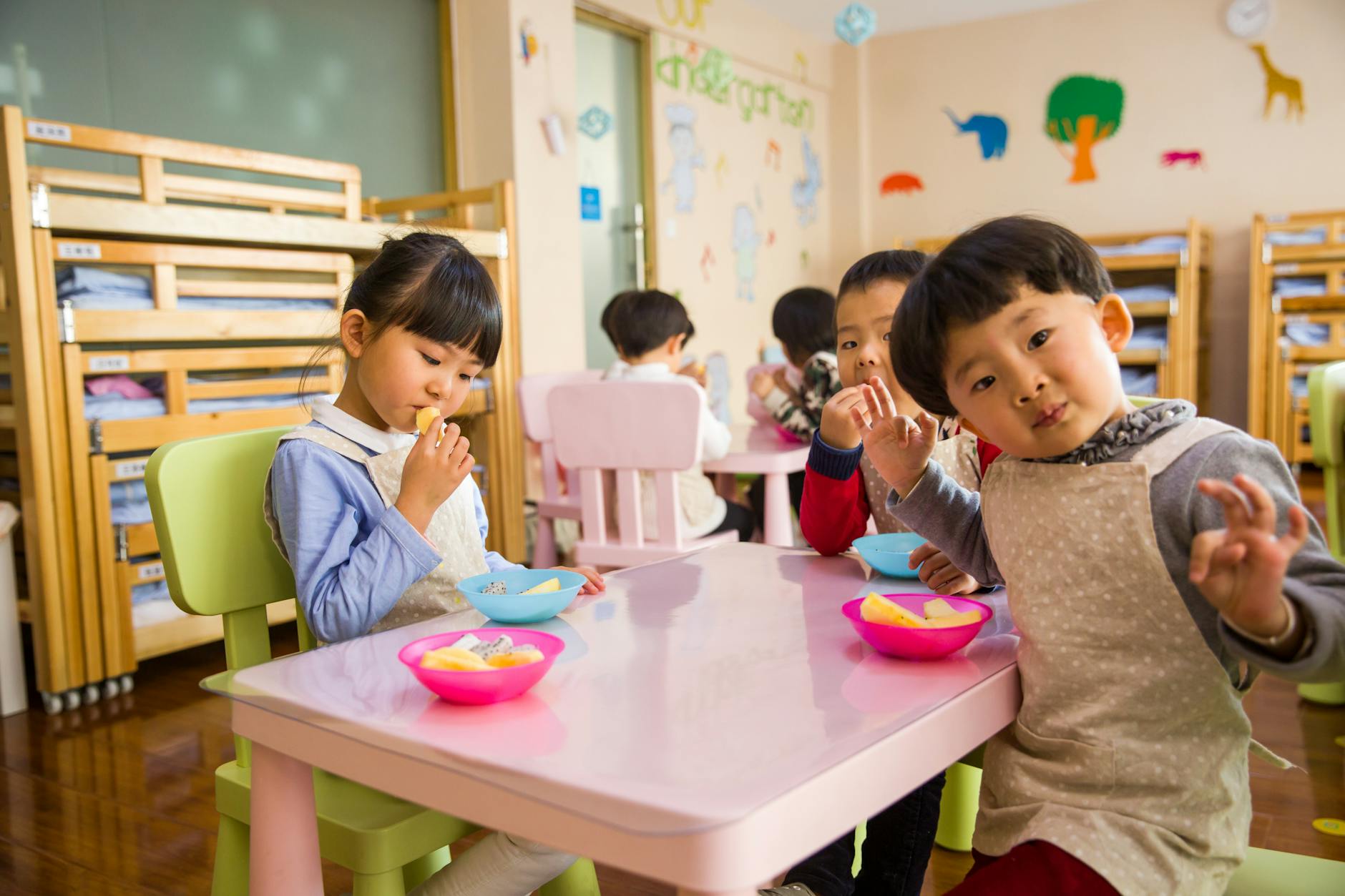
What Does Kindergarten Readiness Actually Mean?
Kindergarten readiness does not mean your child can read chapter books or do math. NJ kindergarten teachers consistently say they want children who can:
- Follow simple directions
- Separate from parents without a meltdown
- Take turns and share
- Hold a pencil and use scissors
- Communicate basic needs (hungry, bathroom, help)
Academic skills are a bonus. Social-emotional skills are the real foundation.
Kindergarten Readiness Checklist — Social & Emotional Skills
- Can separate from parents without prolonged distress
- Follows 2-3 step directions from an adult
- Takes turns and shares with other children
- Can wait without acting out (5-10 minutes)
- Manages basic frustration without a full meltdown
- Can play cooperatively with other children
- Shows empathy — notices when others are sad or hurt
- Can express feelings with words (“I am angry,” “I need help”)
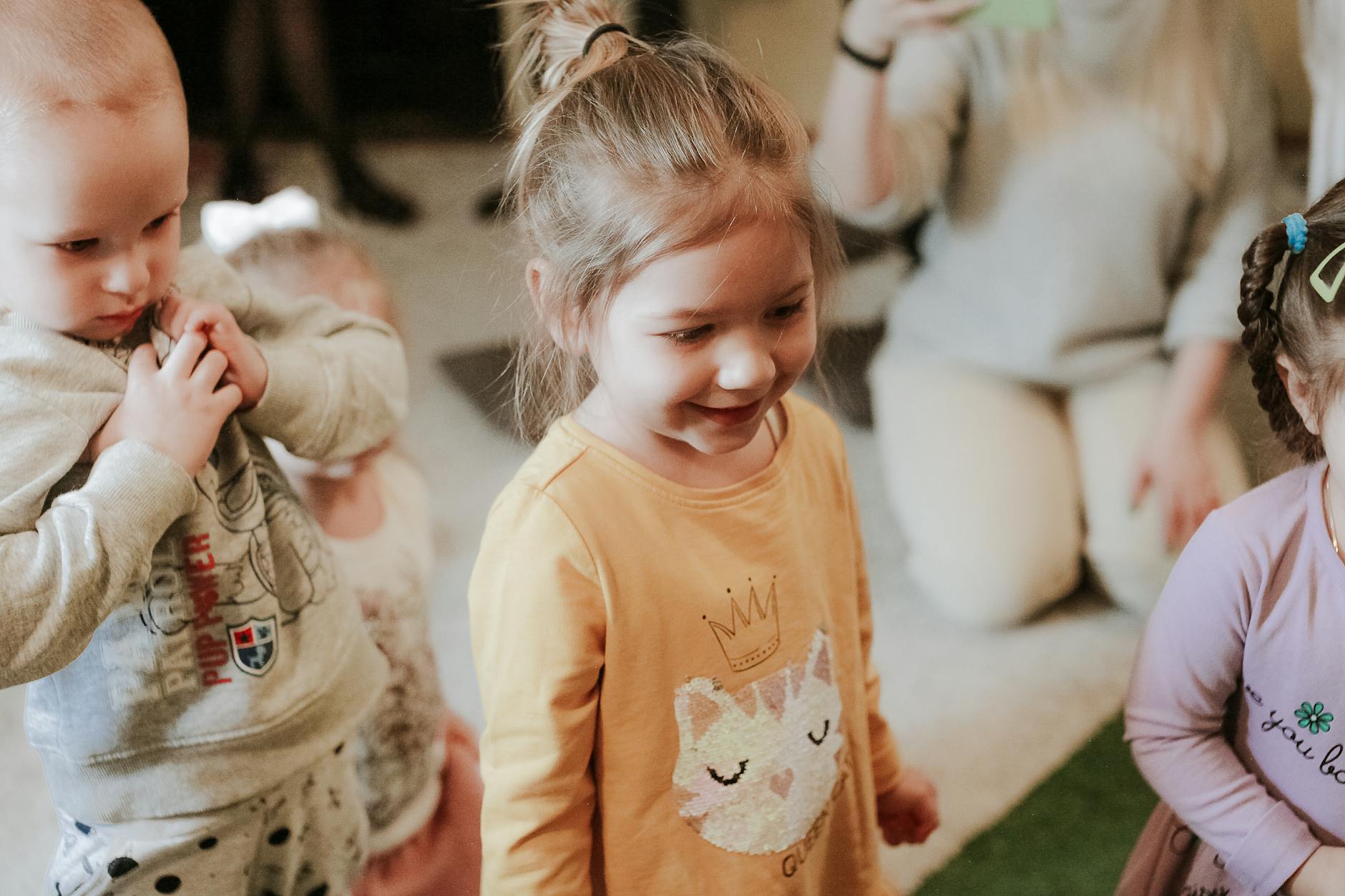
Kindergarten Readiness Checklist — Language & Literacy
- Speaks in complete sentences of 5+ words
- Can tell a simple story with a beginning, middle, and end
- Recognizes their own name in print
- Knows most letters of the alphabet (recognition, not necessarily writing)
- Understands that print goes left to right
- Can rhyme simple words (cat/hat, dog/log)
- Holds a book correctly and turns pages one at a time
- Listens to a story read aloud without interrupting constantly
- Has a vocabulary of 2,000+ words (developed through conversation and reading)
Kindergarten Readiness Checklist — Math & Cognitive Skills
- Counts to 20 (or higher)
- Identifies numbers 0-10
- Understands more/less and bigger/smaller
- Can sort objects by color, shape, or size
- Knows basic shapes (circle, square, triangle, rectangle)
- Understands concepts like first/last, before/after, yesterday/today
- Can complete a simple 12-24 piece puzzle
- Demonstrates basic problem-solving (“What do we do when we run out of glue?”)
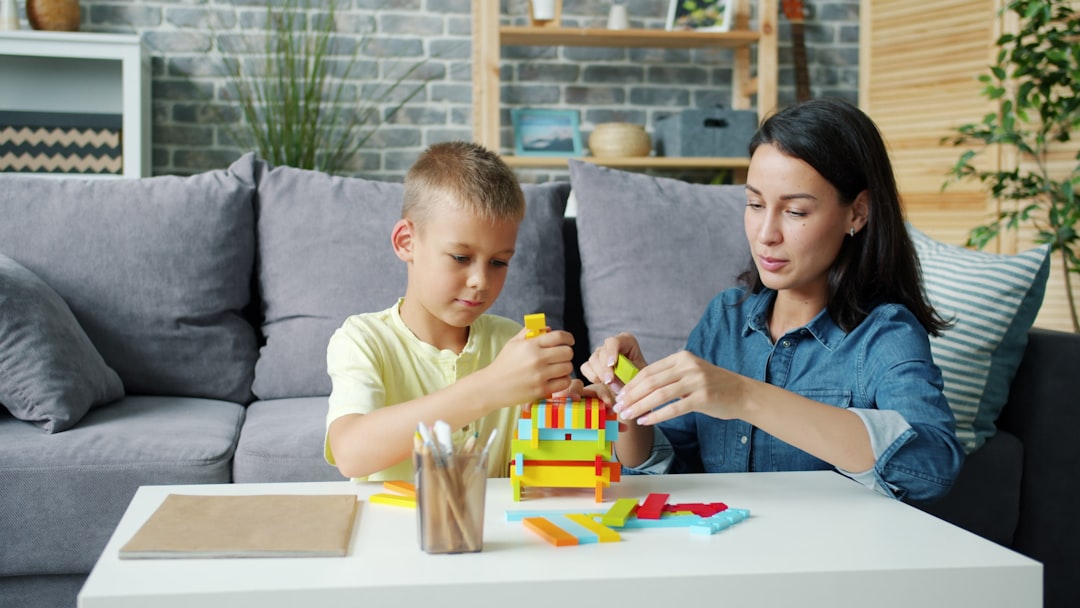
Kindergarten Readiness Checklist — Fine Motor Skills
- Holds a pencil or crayon with a proper grip
- Can write their first name (may not be perfect)
- Uses scissors to cut along a straight line
- Can button, zip, and snap their own clothing
- Can tie shoes (or manage velcro independently)
- Can use a fork and spoon independently at lunch
- Colors within the lines most of the time
Kindergarten Readiness Checklist — Self-Care & Independence
- Uses the bathroom independently (wipes, flushes, washes hands)
- Can put on and take off their coat and backpack
- Knows their full name, parent’s name, and home address
- Can open their own lunch containers
- Asks for help when they need it
- Can sit still and focus for 10-15 minutes
How NJ Pre-K Prepares Children for Kindergarten
New Jersey’s Pre-K standards (aligned with the NJ Preschool Teaching and Learning Standards) are specifically designed to build all the skills above. At Little Einstein’s Academy, our Pre-K program uses the Creative Curriculum — the same research-backed approach used in NJ’s Abbott district preschools — to build literacy, math, social-emotional, and fine motor skills through structured daily activities.
Our Pre-K children work on the letter of the week, number of the week, shapes, science projects, art, dramatic play, story time, and outdoor physical activity every single day. By the time they leave us for kindergarten, they are not just academically ready — they are classroom ready.
What to Do If Your Child Is Behind
If your 4-year-old is missing some items on this checklist, do not panic. Children develop at different rates. Here is what to do:
- Read together daily — 20 minutes of read-aloud per day is the single highest-impact thing you can do for literacy.
- Play with playdough and scissors — Both build fine motor strength faster than any worksheet.
- Practice real conversations — Ask open-ended questions at dinner. Narrate your day. Vocabulary is built through talking.
- Enroll in a quality Pre-K program — 9 months in a structured Pre-K classroom catches up most developmental gaps.
- Talk to your pediatrician — If concerns are significant (speech, motor, attention), early intervention through NJ’s Early Intervention program is free for children under 3, and through the school district after age 3.
When Should My Child Start Pre-K?
NJ public kindergarten requires children to turn 5 by October 1st of the school year. Most Pre-K programs (including ours) serve children ages 3.5-5. Starting Pre-K at 3.5-4 gives children a full year or two to build kindergarten-readiness skills before the transition.
Learn more about our Preschool and Pre-K program in Edison and Roselle, NJ or schedule a free tour to see our classrooms in action.
FAQ: Kindergarten Readiness in NJ
What age is kindergarten in New Jersey?
Children must turn 5 by October 1st to enroll in NJ public kindergarten for that school year. Kindergarten is mandatory in New Jersey.
Does NJ have a kindergarten readiness assessment?
Yes. NJ administers the Kindergarten Entry Assessment (KEA) within the first 6 weeks of kindergarten to establish each child’s starting point. It is not a pass/fail — it helps teachers plan instruction.
Can a child repeat Pre-K if they are not ready?
Some parents choose to delay kindergarten entry (“redshirting”), particularly for children with late summer birthdays. This is a personal decision best made with your child’s preschool teacher and pediatrician.
Does Little Einstein’s Academy prepare children for kindergarten?
Yes. Our Pre-K program is designed to meet all NJ Preschool Teaching and Learning Standards. We track developmental progress through the Creative Curriculum GOLD assessment and share results with parents at conferences.