If you’re researching daycares in Edison or Roselle, NJ, you’ve probably noticed that every center talks about their curriculum — but few explain what those differences actually mean for your child. Montessori, Creative Curriculum, proprietary franchise programs — they all sound great in a brochure.
This guide breaks down the three most common approaches you’ll encounter in central New Jersey, honestly and without jargon, so you can figure out which one actually fits your child and your family.
The Three Main Approaches You’ll Find in NJ Daycares

Montessori
Developed by Dr. Maria Montessori over a century ago, this approach is built around the idea that children learn best when they direct their own learning. In a Montessori classroom, you’ll typically see:
- Mixed-age groups (a 3-year-old and a 5-year-old might share a classroom)
- Specialized, self-correcting materials that children choose independently
- Long, uninterrupted work periods (often 2-3 hours)
- Teachers who observe and guide rather than directly instruct
- Minimal group lessons — most learning is individual or small-group
- Limited use of traditional toys, screens, or fantasy play
In Edison, Apple Montessori Schools operates two locations (Route 27 and Woodbridge Ave), and there are several smaller Montessori programs in the area. Authentic Montessori programs require specially trained teachers and specific classroom materials, which is why they tend to be on the higher end of the price spectrum.
Who it works well for: Self-motivated children who can focus independently, families who value autonomy and practical life skills, parents who want a less structured environment.
Where it can be challenging: Children who thrive on social interaction and group activities, kids who need more direct teacher guidance, families who want a structured daily schedule they can predict.
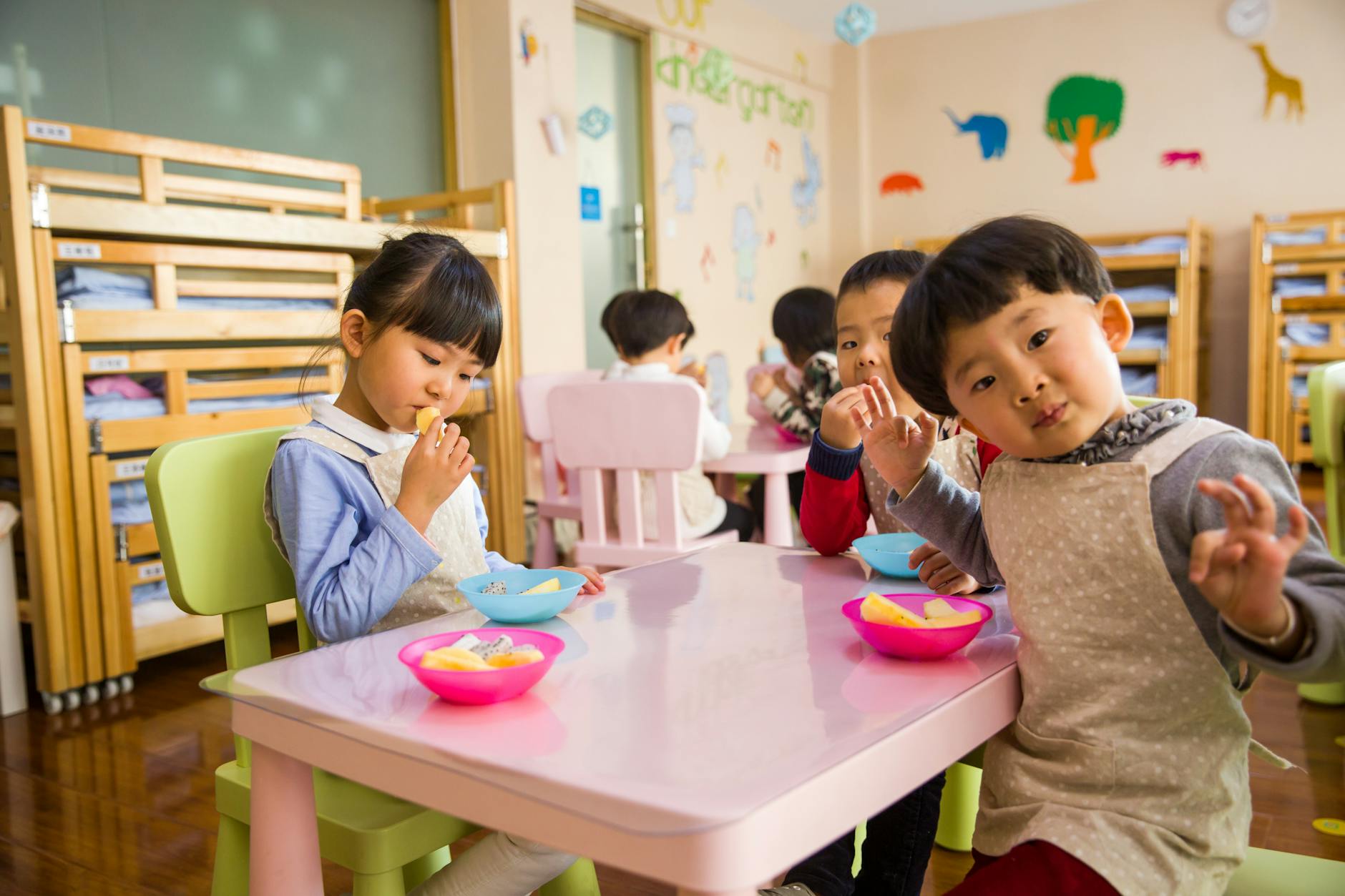
Creative Curriculum
Published by Teaching Strategies and grounded in decades of child development research, the Creative Curriculum is one of the most widely used early childhood frameworks in the United States. It’s endorsed by the State of New Jersey and implemented in thousands of programs nationwide.
In a Creative Curriculum classroom, you’ll typically see:
- Age-grouped classrooms with children at similar developmental stages
- Interest areas set up around the room — blocks, dramatic play, art, science, library, sensory
- Teacher-planned activities based on themes (animals, weather, community helpers) that rotate regularly
- A balance of free play, small-group activities, and whole-group instruction
- Ongoing observation and assessment to track each child’s development
- Daily routines that provide structure while leaving room for exploration
At Little Einstein’s Academy, we use the Creative Curriculum framework at both our Edison and Roselle locations. We chose it specifically because it balances what children need with what research says actually works — without packaging it as a marketing gimmick.
Who it works well for: Most children, honestly. The framework adapts to individual developmental levels, so it works for early developers and late bloomers alike. Especially good for families who want structure without rigidity.
Where it can be challenging: Parents who want a very specific educational philosophy (like pure Montessori or classical academics) may find it too middle-ground.
Traditional / Academic-Focused Programs
Some daycare programs — particularly those marketed as “school readiness” or “academic prep” — use a more traditional, teacher-directed approach. You’ll recognize this style if you see:
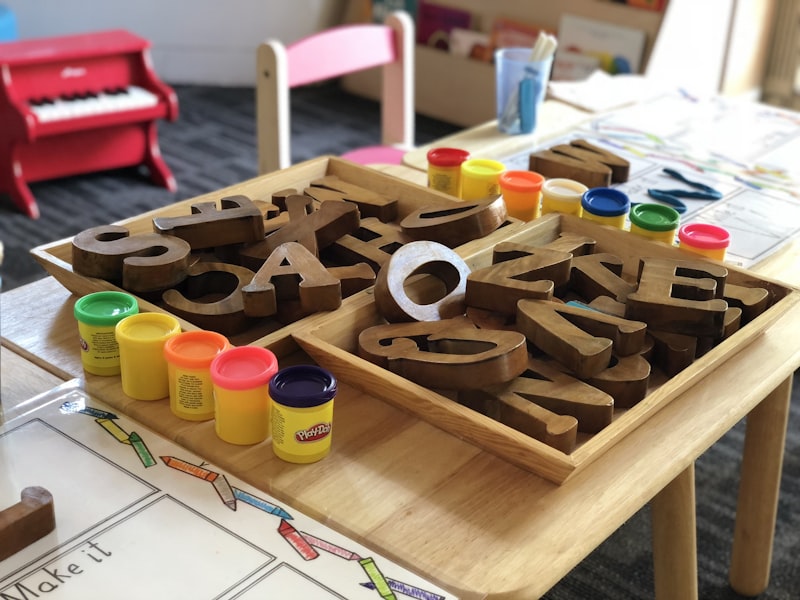
- Worksheets and workbooks, even for 3-year-olds
- Heavy emphasis on letter recognition, number writing, and rote memorization
- Teacher-led instruction with children sitting and listening for extended periods
- Structured assessments and report cards
- Less emphasis on play, social-emotional development, or creative expression
This approach has largely fallen out of favor among early childhood education experts. Research consistently shows that young children learn more effectively through active exploration and play than through direct instruction. Most accredited programs in New Jersey have moved away from purely academic models.
Who it works well for: Older pre-K children (4-5) who are developmentally ready for more structured academics, families whose cultural expectations prioritize early academic achievement.
Where it can be challenging: Younger children who aren’t developmentally ready to sit still and focus, children who need more physical activity and hands-on learning, kids who may develop anxiety or resistance toward school if pushed too early.
Side-by-Side Comparison
| Factor | Montessori | Creative Curriculum | Traditional Academic |
|---|---|---|---|
| Teacher’s role | Observer and guide | Facilitator and co-explorer | Instructor and director |
| Child’s role | Self-directed learner | Active participant | Student and listener |
| Classroom setup | Mixed-age, individual stations | Age-grouped, interest areas | Desks or tables, group-focused |
| Play emphasis | Purposeful work (not “play”) | Intentional play-based learning | Limited, scheduled play time |
| Assessment | Teacher observation | Ongoing observation + tools | Tests, worksheets, report cards |
| Social learning | Through mixed-age interaction | Collaborative projects + group time | Teacher-managed interactions |
| Flexibility | High (child-paced) | Moderate (structured + flexible) | Low (teacher-paced) |
| Cost in Edison | $$$ (Premium) | $$ (Moderate) | $ – $$ (Varies) |
| Research backing | Strong (100+ years) | Strong (peer-reviewed) | Weak for ages 0-5 |
What About Franchise Proprietary Curricula?
Several national franchise daycares in Edison use their own branded curriculum programs:
- The Learning Experience uses L.E.A.P.® (Learning Experience Academic Program)
- Lightbridge Academy uses Seedlings®
- Primrose Schools uses Balanced Learning®
These programs are typically developed by the franchise’s corporate education team and are exclusive to their brand. They often incorporate elements of established approaches (play-based learning, thematic units, developmental milestones) but are primarily designed to differentiate the franchise in the marketplace.
That doesn’t mean they’re bad — many are thoughtfully designed and well-implemented. But it’s worth asking: is the curriculum backed by independent, peer-reviewed research, or is it a brand asset? Can the teachers explain the educational philosophy behind it, or are they simply following a corporate playbook?
At Little Einstein’s Academy, we chose the Creative Curriculum precisely because it isn’t tied to a franchise or a marketing strategy. It’s an independent, research-validated framework used by educators worldwide. Our teachers understand why each activity matters — not just what activity to do next.
How to Evaluate Curriculum Quality During a Tour
Don’t just ask “what curriculum do you use?” — that’s a brochure answer. Dig deeper:
- “Can you show me how today’s activities connect to a learning goal?” — A good teacher can explain why children are doing what they’re doing, not just what they’re doing.
- “How do you handle a child who isn’t interested in the planned activity?” — This reveals whether the curriculum actually adapts to individual children or just plows forward.
- “What does assessment look like here?” — Look for ongoing observation and developmental tracking, not just report cards.
- “How are enrichment activities integrated?” — Music, art, science, and outdoor play should be woven into the daily experience, not tacked on as extras.
- “What training do your teachers receive on this curriculum?” — Teachers should have specific, ongoing training in whatever approach the center uses.

Which Approach Is Right for Your Child?
There’s no universal answer, but here’s a simple framework:
Your child might thrive in Montessori if:
- They prefer working independently over group activities
- They can focus on a single task for extended periods
- They’re motivated by mastering practical skills (pouring, buttoning, sorting)
- You’re comfortable with a less structured daily schedule
Your child might thrive in Creative Curriculum if:
- They enjoy both independent exploration and group play
- They respond well to a mix of routine and variety
- They benefit from teacher guidance but also need room to explore
- You want a balanced approach that covers all developmental domains
Your child might thrive in a traditional academic setting if:
- They’re 4-5 years old and developmentally ready for structured instruction
- They respond well to clear expectations and teacher-led activities
- You prioritize specific academic milestones before kindergarten
Most children — especially those under age 4 — do best with some combination of play, structure, and responsive teaching. That’s exactly what the Creative Curriculum provides, and it’s why we use it at both our locations.
Frequently Asked Questions
Is Montessori better than regular daycare?
Not necessarily. “Better” depends on your child’s temperament, your family’s values, and the quality of the specific center. A well-run Creative Curriculum classroom can be just as developmentally rich as a Montessori environment — and vice versa. The quality of the teachers matters more than the label on the curriculum.
What curriculum does Little Einstein’s Academy use?
We use the Creative Curriculum, a nationally recognized, research-based framework endorsed by the State of New Jersey. It covers all domains of early development through intentional, play-based learning.
Are franchise daycare curricula legitimate?
Many are well-designed and produce good outcomes. The key question is whether the curriculum is backed by independent research or primarily serves as a brand differentiator. Ask the center to explain the educational research behind their approach.
Can I see the curriculum in action before enrolling?
You should absolutely ask to observe a classroom during your tour. At Little Einstein’s Academy, we encourage prospective families to watch our teachers work with children — it’s the best way to understand what we do. Schedule a tour at either location.
Does curriculum matter for infants?
Yes, but it looks different. For infants, curriculum means intentional sensory experiences, responsive caregiving, language-rich interactions, and consistent routines — not worksheets or structured lessons. The Creative Curriculum includes specific guidance for infant and toddler care.
What is the Carson Dellosa curriculum?
Carson Dellosa is an educational publisher that produces supplementary materials and resources used by many childcare centers alongside their primary curriculum framework. At Little Einstein’s Academy, our core framework is the Creative Curriculum, and we supplement it with Carson Dellosa educational materials for specific activities and learning centers.
See Our Approach in Person
The best way to understand how a curriculum works is to watch it in action. We invite you to schedule a free tour at Little Einstein’s Academy and see our Creative Curriculum classrooms firsthand.
Watch how our teachers interact with children. See what activities are happening. Ask questions. Bring your child and see how they respond. That 30-minute visit will tell you more than any website — including this one.
Edison: 334 Plainfield Ave, Edison, NJ 08817 — (732) 985-4700
Roselle: 528-530 E 2nd Ave, Roselle, NJ 07203 — (908) 241-6200