It’s one of the first big decisions you’ll face as a new parent, and there’s no single right answer: when should your baby start daycare?
Some families need care at six weeks. Others wait until their child is walking and talking. Both are perfectly valid — and both come with their own set of questions, worries, and logistics.
This guide is for parents in New Jersey who are weighing their options and trying to figure out when the timing is right for their family.
The Most Common Starting Ages
There’s no magic number, but most families start daycare at one of these stages:
6 Weeks to 3 Months
This is the earliest most licensed centers accept infants. Many parents in New Jersey return to work after their NJ Family Leave benefits expire — typically around 12 weeks combined (FMLA + NJ FLI).
At this age, babies need a calm, predictable environment with low ratios. In New Jersey, licensed infant rooms must maintain a 1:4 staff-to-child ratio with a maximum group size of 8 — some of the strictest requirements in the country.
If you’re considering care this early, look for a center where teachers are experienced with newborns and where you feel comfortable with the communication style. At Little Einstein’s Academy, our infant room teachers send daily updates so you know exactly how your baby’s day went — feedings, naps, milestones, everything.
3 to 6 Months
By three months, most babies have established some regularity with sleeping and eating. They’re also becoming more alert and responsive to faces, voices, and their environment — which means they actually benefit from the sensory stimulation a good daycare provides.
This is the most common starting window for families in Edison and central New Jersey. The combination of parental leave ending and babies being slightly more predictable makes it a natural transition point.
6 to 12 Months
Some parents — especially those with a stay-at-home partner, extended family help, or flexible work arrangements — wait until the second half of the first year. By this point, babies are more interactive, may be crawling or pulling up, and can handle separation a bit more easily.
The tradeoff: waitlists. Infant spots at quality centers fill up months in advance. If you’re planning to start at 6+ months, get on waitlists while your baby is still a newborn. Seriously.
12 Months and Beyond
Starting around a child’s first birthday is less common for full-time care but typical for families transitioning from a nanny, family member, or part-time arrangement. Toddlers entering daycare at this age adapt quickly — they’re curious, social, and ready to explore.
Our toddler program is designed for this exact developmental stage: lots of movement, language-building activities, and structured social interaction that channels a one-year-old’s energy into learning.
What the Research Actually Says
Parents hear conflicting messages about early daycare. Here’s what decades of child development research tells us:
- Quality matters more than timing. The NICHD Study of Early Child Care — the largest long-term study on daycare’s effects — found that the quality of care matters far more than whether a child starts at 3 months or 12 months. A high-quality center at 3 months beats a mediocre one at 12 months.
- Socialization benefits emerge early. Children who attend quality group care develop stronger social skills, better language development, and more school readiness than those in informal care arrangements — particularly for children from lower-income families.
- Attachment is not disrupted. One of the biggest fears parents have is that daycare will weaken the parent-child bond. Research consistently shows that secure attachment depends on the quality of time with parents, not the quantity. Children form healthy attachments to both parents and caregivers simultaneously.
- Consistency matters. Frequent changes in childcare arrangements are harder on children than starting daycare at any particular age. Once you find a good fit, stick with it.

Signs Your Baby May Be Ready
Every child is different, but these are signals that the transition to daycare could go smoothly:
- They show curiosity about other people — watching faces, reaching toward other children
- They can be comforted by someone other than you (even if they prefer you — that’s normal)
- They’ve had some experience being away from you, even briefly
- They have a somewhat predictable routine for feeding and sleeping
- You feel ready. Your emotional readiness matters too.
Important: there’s no such thing as “too early” or “too late” for a child to benefit from quality group care. Children are adaptable. The question isn’t whether your baby can handle it — it’s whether you’ve found a place you trust.
How to Make the Transition Easier
The first week is usually harder on parents than on babies. That said, a few practical steps can smooth the process:
- Visit the center before the start date. Bring your baby for a short visit so they can experience the sights, sounds, and people in a low-pressure way. Most good centers welcome this — at Little Einstein’s Academy, we encourage it.
- Share your baby’s routine in detail. Nap times, feeding preferences, comfort techniques, favorite songs — the more your baby’s teachers know, the faster they can provide consistent care. We ask parents to fill out a detailed routine sheet before the first day.
- Bring comfort items from home. A familiar blanket, a worn T-shirt that smells like you, a favorite pacifier. These small anchors help babies self-soothe in a new environment.
- Keep goodbyes short and warm. Lingering makes it harder for both of you. A quick hug, a cheerful “I’ll be back,” and a confident exit signals to your baby that everything is okay.
- Expect some adjustment. A few days of fussiness at drop-off is completely normal. It doesn’t mean your child is unhappy — it means they’re processing a new experience. Most babies settle within minutes of the parent leaving.
- Ask for updates during the day. If your center offers daily photo or activity updates — ours does — check in. Seeing your baby smiling in a photo 20 minutes after a tearful goodbye is the best reassurance.
For a deeper dive on the logistics, read our guide on preparing your baby for their first day at daycare.
What to Look for in Infant Daycare
Not every daycare that accepts infants does infant care well. Here’s what separates good infant programs from great ones:
- Low ratios, actually maintained. NJ requires 1:4, but ask what the real ratio looks like on a typical Tuesday at 10am — not just on paper.
- Experienced infant teachers. Caring for babies requires specific skills. Ask how long the infant room teachers have been in their role.
- Individualized schedules. Babies don’t follow a classroom schedule. A quality infant room honors each baby’s feeding and napping rhythm rather than forcing a group routine.
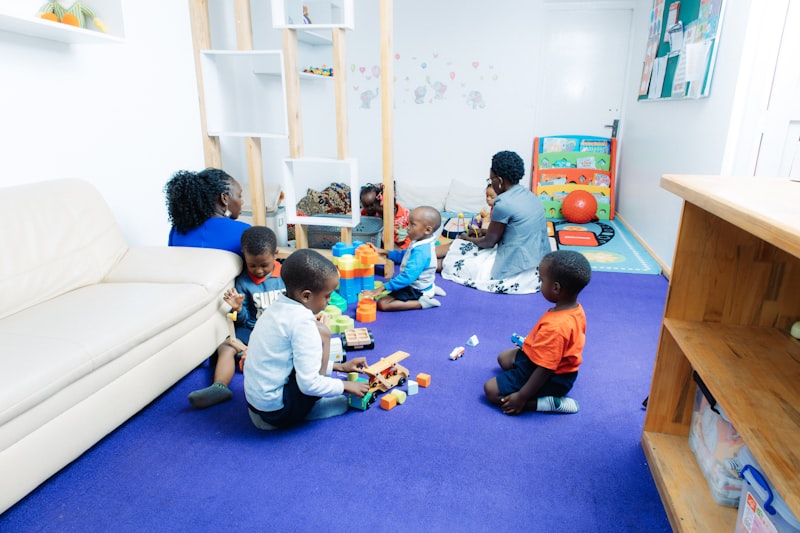
- Sensory-rich environment. Look for age-appropriate toys, soft surfaces, natural light, and quiet spaces for napping — separate from active play areas.
- Daily communication. You should get detailed daily reports on feeding, sleeping, diaper changes, and activities. At Little Einstein’s Academy, parents receive these through our app every day.
- Safe sleep practices. Babies should be placed on their backs in individual cribs that meet current safety standards. Ask about their safe sleep policy.
For infant care in Edison, NJ, or infant care near you, we invite you to tour our infant room and see these practices in action.
The Waitlist Reality in Edison and Central NJ
Here’s something nobody tells first-time parents until it’s too late: quality infant daycare spots in Edison fill up fast. Some centers have waitlists of 6 months or more for infant rooms because the low ratios (1:4) mean very few spots open at a time.
Our advice:
- Start researching centers during pregnancy, not after the baby arrives
- Get on 2-3 waitlists even if you’re not sure about your start date
- Ask each center how their waitlist works — some are first-come, some prioritize siblings
- Don’t wait for a “perfect” age to start looking — the best time to tour is now

Frequently Asked Questions
What is the youngest age a baby can start daycare in NJ?
Most licensed childcare centers in New Jersey accept infants starting at 6 weeks old. Some centers have a minimum age of 3 or 6 months. Little Einstein’s Academy accepts infants from 6 weeks.
Will daycare affect my bond with my baby?
No. Research consistently shows that parent-child attachment depends on the quality of your interactions, not whether your child attends daycare. Babies form secure attachments to multiple caregivers — including parents, grandparents, and daycare teachers — simultaneously.
How long does it take for a baby to adjust to daycare?
Most babies adjust within 1-2 weeks. Some take a few days, others a bit longer. Younger infants (under 6 months) often adjust faster than older babies who are more aware of separation. Consistent attendance helps — sporadic schedules make adjustment harder.
Is part-time daycare an option for infants?
Yes. Many centers, including Little Einstein’s Academy, offer part-time schedules — 3 days per week or half-day options. This can be a good way to ease into group care while maintaining time at home.
How much does infant daycare cost in Edison, NJ?
Full-time infant care in Middlesex County runs $1,400-$1,900 per month. Part-time is less. Many families qualify for NJ childcare subsidies that reduce the cost significantly — some families at Little Einstein’s Academy pay $0 out of pocket.
Should I start daycare before returning to work?
If possible, yes. Starting daycare 1-2 weeks before your return-to-work date gives your baby time to adjust while you’re available for early pickups or shorter days. It also gives you peace of mind before diving back into work.
Take the First Step
You don’t need to have everything figured out. If you’re thinking about daycare for your baby — whether you need care next month or six months from now — the best thing you can do is visit a center and see what quality infant care looks like in person.
At Little Einstein’s Academy, we welcome tours for expectant parents and families at any stage. Come see our infant room, meet our teachers, and ask us anything. There’s no pressure, no commitment — just a chance to see if we’re the right fit for your family.
Schedule a free tour or learn more about our Edison location.
Edison: 334 Plainfield Ave, Edison, NJ 08817 — (732) 985-4700
Roselle: 528-530 E 2nd Ave, Roselle, NJ 07203 — (908) 241-6200