STEAM — Science, Technology, Engineering, Art, and Math — sounds like something for older students. But early childhood researchers have known for decades that the preschool years are the most powerful window for STEAM thinking. The curiosity, problem-solving, and creativity that define great scientists and engineers are built in the years before kindergarten, not after it.
What Is STEAM in Early Childhood?
At the preschool level, STEAM is not coding classes or robotics kits. It is the habit of mind that underlies all of those things:
- Noticing — “Why does the ice melt?” “What happens if I add more blocks?”
- Predicting — “I think the tall tower will fall over.”
- Testing — Trying it and seeing what happens
- Reflecting — “It did fall! What if we make the bottom wider?”
This is the scientific method — and it happens naturally in block play, water tables, art projects, and cooking activities when teachers know how to facilitate it.
STEAM Activities in Our Daily Program
At Little Einstein’s Academy, STEAM is woven into every part of the day rather than siloed into a single “STEAM time” block. Here is how:
Science
- Weather observation and recording at circle time (daily)
- Five senses explorations (taste, touch, smell, sight, sound)
- Plant growing — seeds to sprouts, observing root growth
- Simple experiments: mixing colors, sink or float, magnet play
- Animal life cycles and habitats through books and models
Technology
- Age-appropriate computer and tablet activities for pre-literacy and math
- Learning to use tools (child scissors, rulers, magnifying glasses)
- Understanding cause and effect through simple machines (ramps, levers)
Engineering
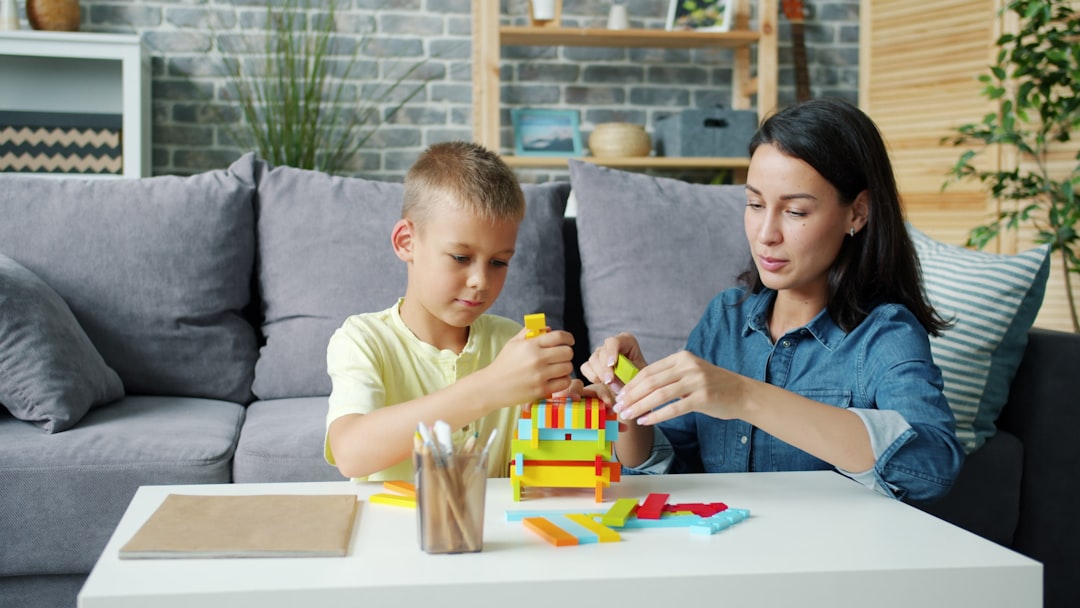
- Block building — planning, building, testing, revising structures
- Cardboard and tape construction challenges
- Ramp and marble run experiments (“How do we make the ball go faster?”)
- Building with magnetic tiles, Duplo, and Lincoln Logs
Art
- Monthly art projects tied to curriculum themes (letter, color, shape, season)
- Painting, collage, sculpture, and printmaking
- Process art — focus on creating, not just the finished product
- Color mixing experiments that bridge Art and Science
- Architecture appreciation through famous buildings books and block replication
Math
- Number of the Week — recognition, writing, counting, real-world application
- Shape of the Month — identifying, drawing, finding in the environment
- Sorting and classifying (by color, size, shape, texture)
- Patterns (ABAB, ABBA) using blocks, beads, and body movements
- Measurement — comparing lengths, weights, and volumes with real objects
- Graphing — “How many children prefer cats vs. dogs?” — counted, graphed, discussed
STEAM at Home: 8 Activities for Preschoolers
You do not need a lab to do STEAM with a preschooler. These activities use materials you already have:
- Sink or Float — Fill a bin with water, collect 10 objects, predict and test whether each one sinks or floats. Record results with drawings.
- Color Mixing — Use food coloring in water or mix paint colors. “What happens when red and blue mix?” Let them predict first.
- Tower Challenge — “Build the tallest tower you can using only 20 index cards.” No scissors — only folding and stacking.
- Ramp Racing — Use books to create ramps of different heights. Which car goes farthest? Why?
- Ice Excavation — Freeze small toys in a block of ice. Give your child warm water, salt, and tools to free the toys. How does temperature affect ice?
- Shadow Tracing — Go outside with chalk and trace your child’s shadow in the morning. Return in the afternoon and trace it again. Why did it move?
- Cooking Math — Involve children in measuring ingredients. “How many half-cups make one cup?” Counting, fractions, volume — all at the kitchen table.
- Nature Sorting — Collect leaves, rocks, and sticks on a walk. Sort them by size, color, texture, or type. Make a nature chart.
Why STEAM Matters for Kindergarten Readiness
NJ kindergarten teachers report that children who have strong STEAM foundations arrive with better:
- Problem-solving persistence (“I’ll try another way” instead of giving up)
- Vocabulary for explaining their thinking
- Comfort with math concepts (number sense, measurement, patterns)
- Curiosity-driven engagement with new material
These are not just STEAM outcomes — they are the skills that make children successful across all kindergarten subjects. See our full Kindergarten Readiness Checklist to understand what teachers look for.
STEAM at Little Einstein’s Academy
Our program is built on the Creative Curriculum, which integrates STEAM thinking across all 11 interest areas. Our children do not “have STEAM class” — they think like scientists and engineers all day, in ways that feel like play.
Schedule a free tour to see our science, engineering, and art activities in action at our Edison or Roselle location.
FAQ: STEAM in Preschool
What age should children start STEAM activities?
From birth. Infants exploring different textures, toddlers stacking and knocking down blocks, and preschoolers conducting simple experiments — all of these are STEAM. Formal STEAM curricula become more structured from age 3-4.
Is STEAM the same as STEM?
STEM (Science, Technology, Engineering, Math) is the original framework. STEAM adds Art — which research shows is essential for creative problem-solving and design thinking. Most quality early childhood programs use STEAM.
Do NJ preschools teach STEAM?
NJ Preschool Teaching and Learning Standards include science, technology, and mathematical thinking as core domains. Quality centers integrate these through play-based learning rather than formal lessons.